
How One “Bad Apple” is Making a Difference for Dogs with Tethered Cord Syndrome
“Malus was so much more than his struggle, and I hope people remember him for all the right reasons.”
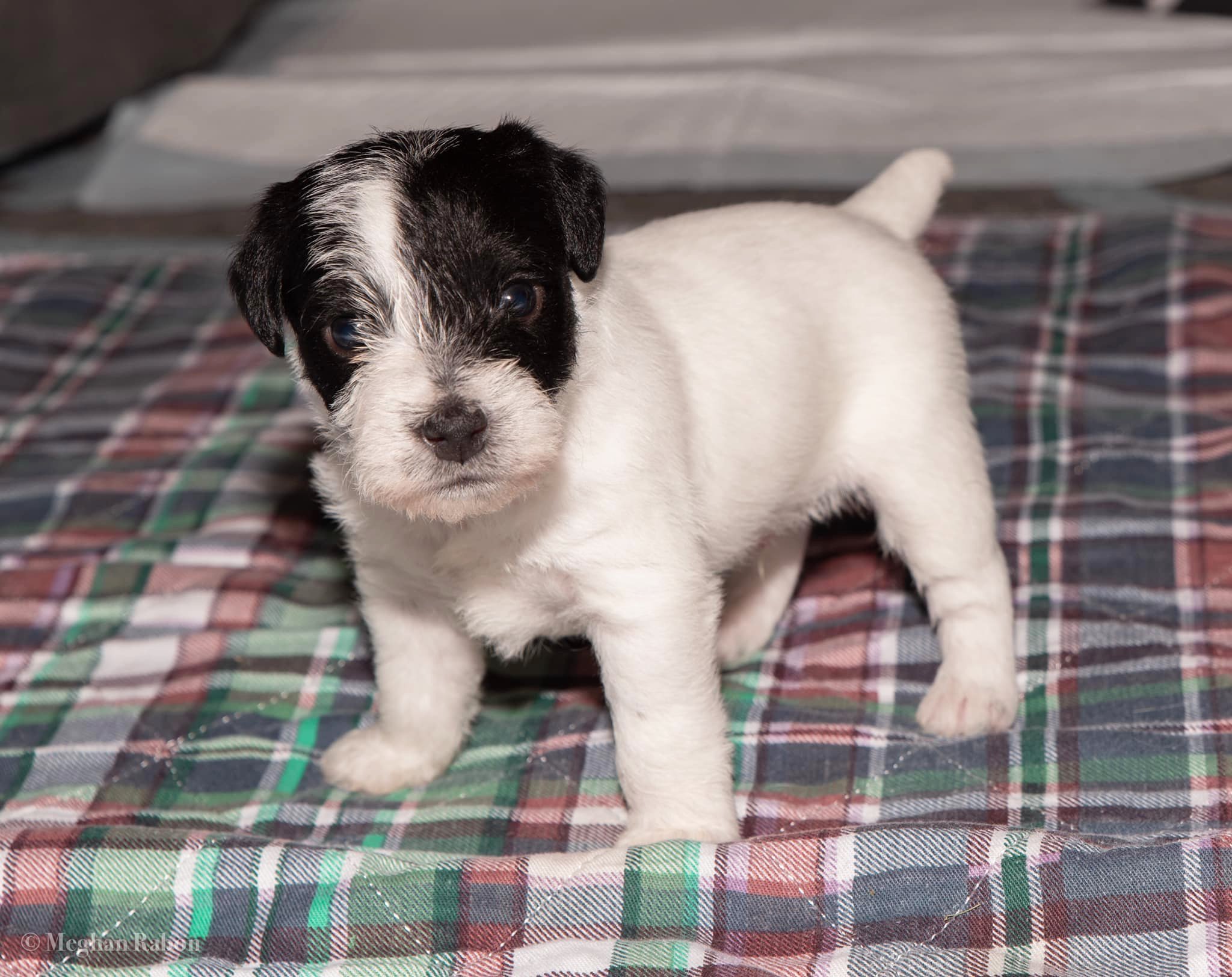
When Katrina and Kevin brought their puppy Malus home on New Year’s Day 2020, they looked forward to a lifetime of cuddles, fun, dog sports, and Jack Russell Terrier spunkiness. Since “malus” is both the scientific name for the genus that includes the domesticated orchard apple and the Latin word for “bad” or “wicked,” his loving nickname was “Bad Apple.”
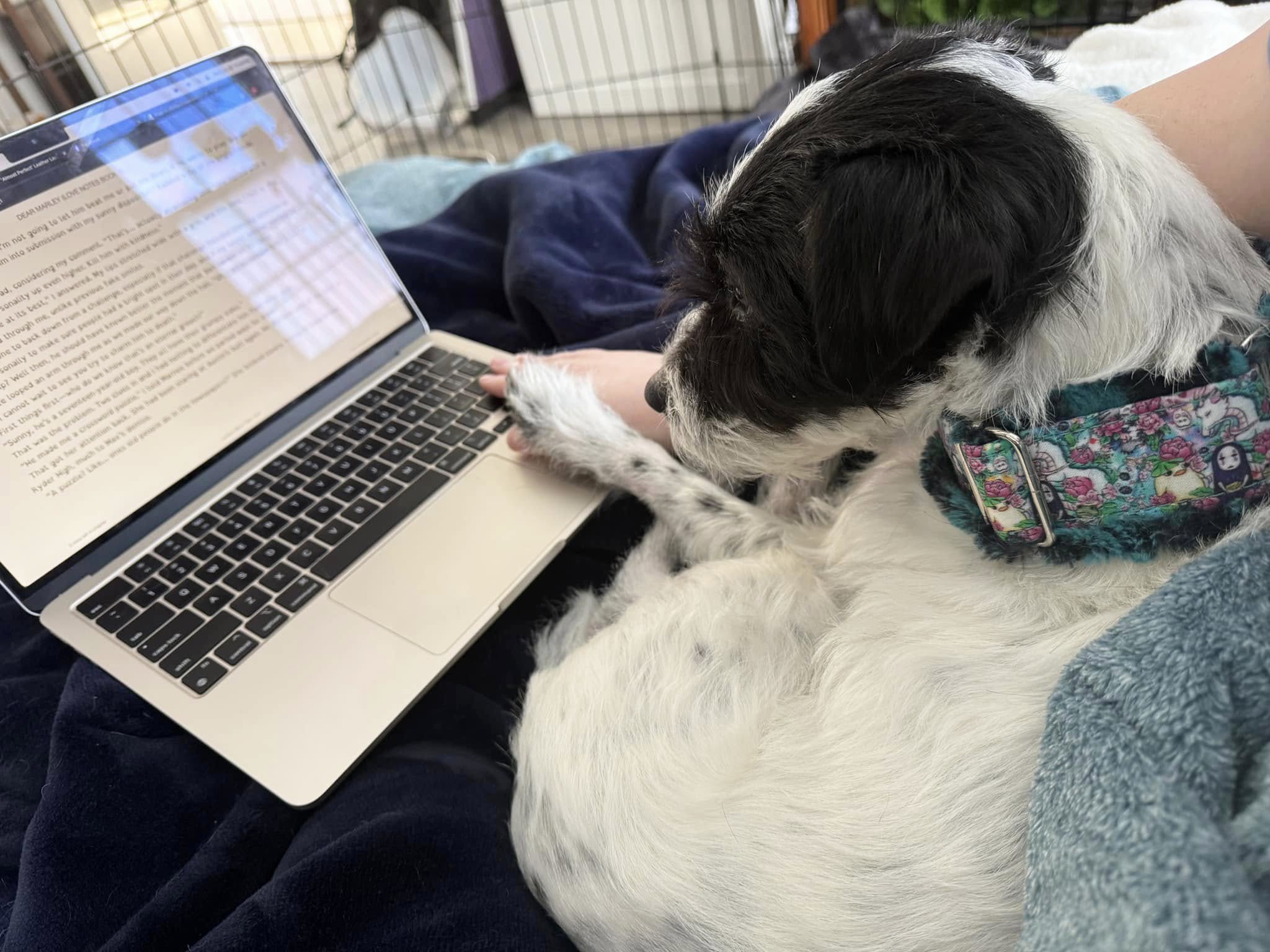
For five and half years, Malus and his people enjoyed training together, watching Glee, and competing and titling in a multitude of activities including Fast CAT, Barn Hunt and Happy Ratters, NASDA (National American Sport Dog Association), NACSW (National Association of Canine Scent Work) and CPE Canine Scent Sport, and tricks, rally, and lure coursing, including yearly trips to JRTCA (Jack Russell Terrier Club of America) Nationals.
But starting at an early age, Malus had some behavioral quirks that became more serious as he reached maturity. What started as minor sensitivity to handling eventually morphed into periods of intolerance of his canine housemates and aggression towards his beloved humans. He displayed odd physical behaviors such as occasional lameness with no apparent cause, foot and tail chewing, and discomfort when eliminating, and experienced gastrointestinal episodes that made him miserable.
Katrina diligently pursued training, behavior modification, consultations with veterinary specialists, and a broad range of diagnostics, medication and physical therapy in an effort to find reasons for the symptoms she was seeing and answers that would help Malus feel better. Finally, in September 2024, it was suggested that Malus’s issues might be due to tethered cord syndrome (TCS).
What is Tethered Cord Syndrome?
Tethered cord syndrome is a neurological abnormality where the end of the spinal cord is anchored within the spinal canal, preventing the spinal cord from moving freely. A dog with a tethered cord will feel excessive tension in the lumbar area, leading to chronic pain and a variety of related issues. While TCS in dogs has been documented as far back as 1989, it didn’t really start gaining recognition until 2015, after a case report was published in the Journal of Veterinary Internal Medicine describing the diagnosis and surgical treatment of a one-year-old female Cocker Spaniel.
Since then, the number of confirmed TCS cases has increased as both veterinarians and dog owners, not only in the United States but around the world, have become familiar with the condition. A dynamic MRI, which captures images that allow evaluation of areas of the body in motion, is currently the most effective way to reach a TCS diagnosis. There are, however, cases in which structures appear normal during an MRI. Those cases are referred to as occult tethered cord syndrome (OTCS), and the diagnosis may not be confirmed until the dog shows positive results after surgical detethering.
TCS Symptoms
There is still so much to be learned about TCS, and as veterinary neurologists see additional cases, indicators that are more definitive may become apparent. Since symptoms can be non-specific and intermittent, for now, TCS is often a diagnosis of exclusion. Symptoms may include:
- Pain in the lower back
- Lameness in the hind end or altered gait, such as holding one leg up
- Discomfort when eliminating, reluctance to relieve themselves, or incontinence
- Biting or looking worriedly at their hindquarters
- Obsessively chewing feet/legs
- Muscle atrophy
- Difficulty settling or finding a comfortable position
- Gastrointestinal issues that cannot be controlled or resolved through diet and/or medication
- Intolerance to being handled, especially around the hind end
- “Grumpiness” or aggression to other pets/people in the home with no easily identifiable trigger
TCS cases primarily seem to be congenital, meaning the condition is present at birth, so these symptoms may start while a puppy is young and understandably be chalked up to growing pains. If you’re seeing more than one of these symptoms, you’ve been seeing them over a prolonged period, and diagnostics and treatments have not provided answers or relief, you may wish to consult a neurologist familiar with TCS.
Treatment Options
Treatment for TCS starts with pain management. Effective pain management may involve multiple medications, and it may take some time to find the right combination at the right dosages, but consulting a pain management specialist can be a crucial step in making a dog significantly more comfortable until further diagnostics or surgery can be arranged.
In most cases, intradural surgery to detach or “untether” the specific band of tissue that is putting tension on the spinal cord will be recommended. Katrina and Kevin took Malus to Massachusetts in December 2024 to see Dr. Elizabeth Parsley, one of the veterinary neurologists at the forefront of TCS research and treatment. A dynamic MRI confirmed the diagnosis and Malus had surgery the next day.
Malus’s Legacy
The surgery went well and Malus showed progress in his recovery. There were really good days when it seemed like the worst was behind them, that his body would no longer be his enemy, and that his family could look forward to the peaceful and joyful relationship they all deserved. But sadly, a lifetime of pain proved to be more than Malus could overcome, and Katrina and Kevin gave him the greatest gift and released him from his suffering in May 2025.
Since then, Katrina has made it her mission to spread awareness of TCS and help other dog owners find answers for their dogs. She created a Facebook Group, Dogs with Tethered Cord Syndrome, that welcomes anyone interested in learning more about the condition. There is an offshoot group reserved for owners of dogs with confirmed TCS diagnoses.

In Malus's memory, she commissioned an “Untethered” logo and had shirts printed via Bonfire to raise funds for an educational campaign that will include materials on recognizing signs of pain in your dog, navigating veterinary consults while advocating for/being the expert of your dog, and specifically about TCS. “Malus changed my life forever,” says Katrina. “He taught me the strength in being vulnerable, the strength in community. I am here to support owners who are feeling alone battling a mystery medical and/or behavioral issue with their dog. I am here to be as loud as I need to help tethered dogs reach diagnosis and relief as early as possible."
Resources – Veterinarians treating or available to consult on TCS cases
Dr. Elizabeth Parsley, DVM, DACVIM
Massachusetts Veterinary Referral Hospital, Woburn, MA, USA
https://www.massvethospital.com/staff/elizabeth-parsley
Dr. Rachel Lampe, BVetMed, MS, DACVIM
Canada West Veterinary Specialists, Vancouver, British Columbia, Canada
https://canadawestvets.com/our-team/dr-rachel-lampe/
Dr. Casey Smith, BVM&S, DACVIM
Pulse Veterinary Specialists, Edmonton, Alberta, Canada
https://pulseveterinary.ca/about/#neurology
Dr. Emma Davies, BSc, BVSc, DipECVN, MSc
Dr. Georgina Stewart, BVSc, DACVIM
ARC Vets, Auckland, New Zealand
https://arcvets.co.nz/our-services/neurology-neurosurgery/
Dr. Javier Espinosa Romero, DVM MRCVS
Pride Veterinary Referrals, Derby, United Kingdom
https://www.prideveterinaryreferrals.com/en-gb/referred-pets/meet-the-team#neurology
Dr. Ane Uriarte, DVM, Dip. ECVN, FRCVS
NeuronaVet, Travels to see cases within the United Kingdom
https://www.neuronavet.com/about-us/
For More Information (click the title for the link)
Diagnosis, surgery, and outcome of tethered cord syndrome in 12 dogs
January-February 2026; Journal of Veterinary Internal Medicine
Occult Tethered Cord Syndrome in Dogs (video)
October 14, 2025; In this webinar, Dr. Javier Espinosa reviews his recent study on 30 dogs with confirmed or presumed OTCS
July 10, 2025; Frontiers in Veterinary Science
Breakthrough Surgical Procedure Relieves Dogs from Chronic Pain
February 15, 2023; Tufts University Cummings School of Veterinary Medicine article
Advances in Tethered Cord Syndrome in Veterinary Medicine (video)
August 25, 2021; Dr. Abigail McElroy and Dr. Elizabeth Parsley discuss the recent advances in veterinary medicine in both the diagnosis and treatment of tethered cord syndrome
Occult tethered cord syndrome in the canine: Microsurgical resection of the filum terminale
September 2020; Interdisciplinary Neurosurgery
Tethered Cord Syndrome Associated with a Thickened Filum Terminale in a Dog
January 15, 2015; Journal of Veterinary Internal Medicine
May 1, 1989; Journal of the American Veterinary Medical Association
